
(This article is the continuation of my previous article – The Paradox of Harmony: Yin, Yang, and The Fragility of Balance)
A’s attention suddenly focused on another paragraph, “…Hey, this is like my disease!…”
Your gaze follows the paragraph he is now pointing to, “…a certain part of my body feels very painful; if it is exposed to cold it gets worse, if it is exposed to warmth it gets better… This is how I feel.”
“Are you sick too? But you look so healthy.”
“Just this past week. My neck, shoulders, and even my hands have been feeling incredibly sore. The AC in the office is really loud; they all can’t stand the hot summer air, so they set the AC up like that. But it’s summer—the air is naturally hot, right? That’s just natural. Using AC means it’s artificial; it’s not good for your health. So, the heat should be enjoyed!… But I’m the only one protesting like that. No one in the entire office protests. Well, what can I do? The majority vote wins. That’s why my neck, shoulders, and right hand feel uncomfortably sore, especially when I have to sit in front of the computer and analyze data with a high level of seriousness for a whole day. After I get home from the office, my right hand is at its worst; it can feel like plastic… or rubber… basically like a dead object, because it suddenly feels so numb.”
A’s statement really surprised you. “So your hand suddenly… can’t move?!…”
“It can still be moved. How to explain it, yeah… basically, it feels like rubber, plastic, or another inanimate object. If our hands are part of a living creature, there is an aura of life; it’s pleasant to move—we can feel the blood flow, nerves, and other metabolism working well. If this doesn’t… I don’t know! I’m not a medical person; it’s hard for me to explain this!…”
“How about you come with me to my practitioner next week? I’ve already made an appointment with him, but I can make one for you too.”
A thought, “But it’s not that painful or disturbing, though. For example, like now. I’m also staring at the computer to read Chinese Medicine data, right? Right now my body is one hundred percent free from that disturbing feeling.”
“Because my office isn’t cool. When you work in the office again and are exposed to the air conditioning, your illness will definitely flare up again. You have to fix that so it doesn’t get worse.”
“Then the problem is with the air conditioning in my office. As long as they set the air conditioning to that level, no matter where I go for treatment, my illness will always come back. There’s really no other way. Hopefully, I can hold out until autumn, when it gets colder and they’ll turn the air conditioning off automatically.”
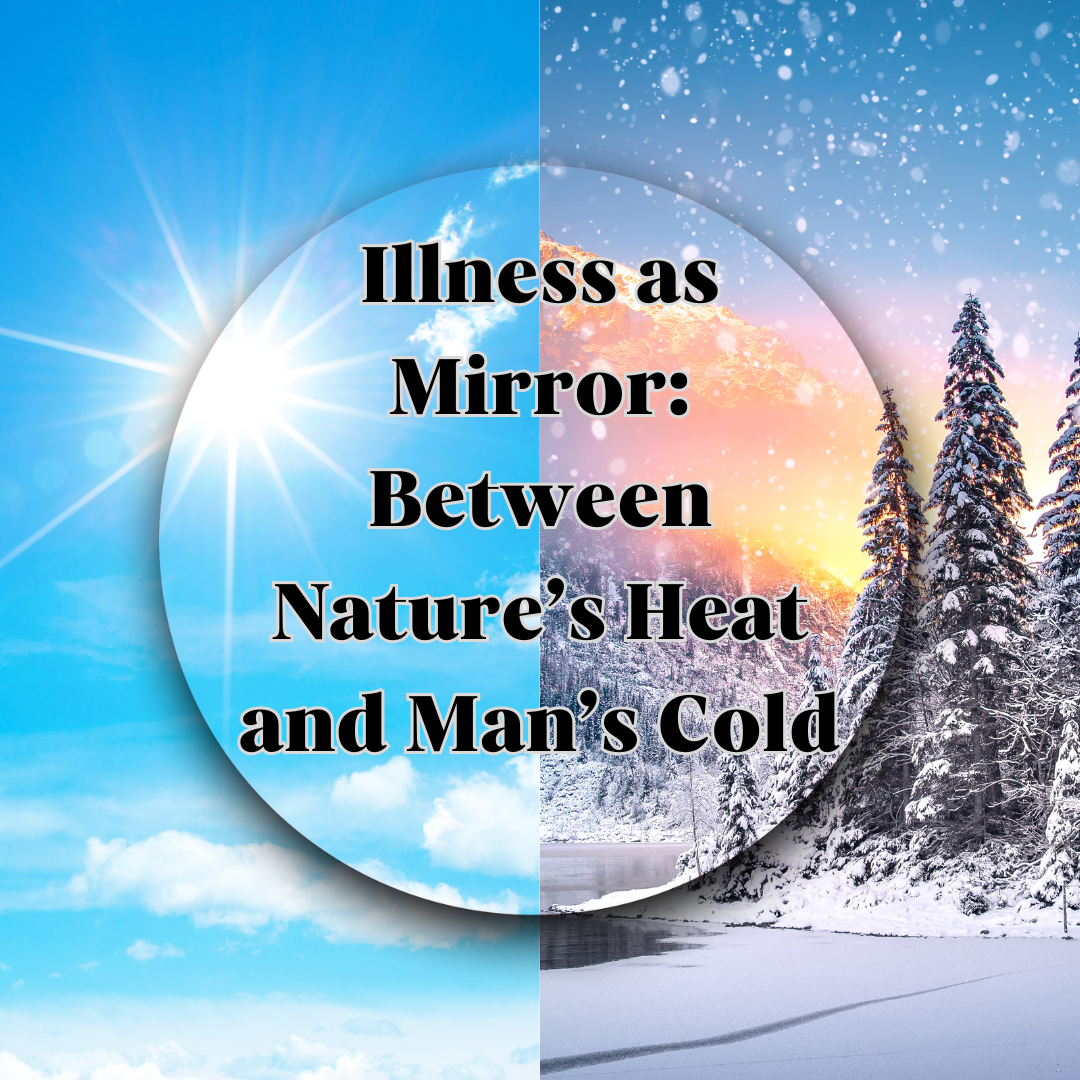
You read sentence by sentence in the paragraph explaining the symptoms A is suffering from, “…Hyperactive Yin due to Yang Deficiency. Initially, the body lacks Yang—which is responsible for providing warmth, or heat, to the body. Because Yang—warmth, heat—is reduced, Yin—the opposite—will automatically increase, but that does not bring good things, only bad things—illness. The symptoms are the symptoms of Yin itself, which are closely related to cool and cold. Such as pain increasing when there is cold, decreasing when removed from cold, or getting close to something warm or even hot… Hey, then, can you warm yourself in the office? For example, wear a very thick sweater? Then you would be giving yourself warmth, right? Maybe that is a way to reduce your illness?”
A blinked, then looked at you very carefully. “But… that would really embarrass me there. The people in my office have really bad mouths. They love to gossip about people. You know, the seniors are even worse; they can laugh at people right under their noses! If I wear a sweater like that, they might not just laugh at me—they might start a rumor that I’m seriously ill and spread it until the whole office knows!”
“Gosh, your work environment is so toxic! How can you still survive working in a place like that?…”
“What can I do? The layoffs are so crazy. One person leaves, a thousand people line up to apply. So if I resign, won’t I be unemployed for an indefinite period? The important thing is that Mr. L, one of my highest bosses, isn’t like that. Mr. L is indifferent and only cares about professional matters; if you are productive and produce good work, he will like you. In fact, those people can only gossip without any purpose and suck up to the boss and badmouth other people—that’s the weapon they use to fight their rivals. Empty vessels make the most sound; that’s how they are.”
“People like that won’t last long, because what’s needed in the workplace is efficiency and productivity—professionalism. They don’t have that. Especially in this day and age, where many jobs can be replaced by AI. These people will be the ones displaced in the first quarter, because in terms of professionalism, they are far behind AI.”
“You’re wrong. They have skills that AI doesn’t have—flattery, and ass-licking. How could AI do that, right? Meanwhile, Mr. L is only one of the Executives who is ‘sane.’ The others? Also crazy about praise; in other words, crazy about having their asses licked!”
“Imagine if AI were trained to be a people-pleaser and an ass-licker—who knows, maybe AI could outperform humans?” you joke. A responds with a wry smile. Your joke doesn’t seem to have succeeded in assuaging his disgust with the toxic environment in his office. “If there’s a job opening in my office, I’ll let you know. Or I can ask one of the seniors directly, in case they’re looking for an employee like you. My office has a pretty good environment. Well, there are definitely one or two people who like to cause trouble, but that’s normal. We don’t live in a utopia; we can’t expect everything to run perfectly as we wish. But anyway, it’s pretty good. You’ll definitely like it. Especially since you’re very professional—the Executives will definitely like you too. The only problem here is they’re very workaholic. If you’re not strong, you’ll definitely be very exhausted. But you’re very professional; you’re a very serious and highly dedicated person—indeed, you’ll definitely thrive in this kind of work pattern. Hey, that’s true. Maybe the positive side of this culture is that time is wasted on work, so they don’t have time to gossip. Hey, it turns out that a workaholic culture has its good points too—one of which is allocating the time people spend gossiping to work.”
“Workaholic or not, that’s secondary for me. What I dislike most is this extremely toxic environment. The Executives here win only from insider connections and inherited privilege; children or grandchildren inherit the company. They think that if their predecessors were great, their descendants must also be great, so they must be respected.” A pursed his lips. “All they know is bourgeoisie and wallowing in luxury goods. Going on super-luxury yachts far more often than most professional executives. How can the environment not be toxic because of that?”
You shook your head and clicked your tongue. “Just be patient. I’ll check with my office for job openings. I can’t promise any, because, as you said, there are far fewer openings and far more applicants. But who knows? I might be able to help you escape that den of thieves.”
A smiled slightly, but sincerely. “Thank you, my best friend.”
“Meanwhile, take my advice: wear a thick sweater. You said, right, there’s Mr. L, who prioritizes professionalism over flattery. Besides, remember these words: you work your whole life like a slave for the company, but when you die, it only takes three days for the company to find a new employee to replace you. We must be professional and loyal in our work, but we must not sacrifice ourselves—especially for bosses who don’t appreciate us like most of the Executives in your office. Don’t sacrifice yourself for them! You’re smart and very professional; you’re a diamond in the workplace—they should appreciate you! If wearing a sweater to work makes them upset, then clearly they are not good leaders. You must be even more firm in your principle of not caring about them.”
A took a deep breath. “Your advice is easy and pleasant to hear, but difficult to implement… okay, I’ll try it first.”
“I’ve tried it. I’ve worn the thick winter sweater you suggested. The pain hasn’t lessened. You know what? It’s gotten worse.”
That’s what A reported to you three days later during a casual evening gathering after work in a nearby park. The park was quite busy, with people strolling leisurely, many bringing their children or their beloved dogs to unwind after work. There were also many elderly people sitting and chatting, enjoying the relaxing atmosphere.
You raised an eyebrow. “Getting worse?”
“In some situations, now my hands can’t move. My neck and shoulders are so stiff that suddenly I have a hard time turning my head to the left or right… hmm, I can still turn to the left, but the right is really hard.”
“How are you now?”
“Fortunately, it only happens rarely. And also, when it does recur, it only lasts for a fraction of a minute. I slowly force my hand to move… then I turn my head with patience… finally I can move it…”
“So, are you okay now?”
“Not yet, because it still hurts. A relapse like that could happen again later.”
“I clearly see that the symptoms you mentioned, with that affiliated syndrome, are all just a matter of needing warmth. And judging by your story, wearing a thick sweater to ward off the excessively cold air conditioning is logical. Why is that? Or perhaps the sweater you’re wearing isn’t thick enough?”
“It’s so thick; it even makes me feel hot. It’s quite effective in keeping out the air conditioning in there.”
“Hmm, I’m not a health professional either, so I might give you the wrong advice. You should consult a credible health professional, but I’m just a layperson. Come with me to meet my practitioner. I’ll make an appointment for you.”
You see, A doesn’t believe in complementary medicine. He’s skeptical of conventional medicine, let alone treatments considered complementary like Chinese Medicine. A doesn’t like to check his health as regularly as you do. So you already guessed this would be A’s reaction: furrowed brows, deep in thought, weighing things up, not answering immediately for quite a while as if he were making an important decision in an important company meeting—no, this is quite beyond your expectations. Because usually A immediately rejects any idea related to checking his health; the reason being he is very healthy. So, it seems there is quite a significant difference with the understanding he has held so far.
“Okay,” he said after much thought, and his tone as he spoke was like he had just decided on a very risky tender for the company, “When are you going there? I’ll come with you.”
Disclaimer:
This content offers high-level insights intended to stimulate intellectual discussion. It draws from research and analysis, integrating perspectives from Chinese Medicine and related disciplines. However, it is not a substitute for professional medical, scientific, or clinical advice. Readers are encouraged to engage critically and consult a qualified Chinese medicine practitioner or licensed healthcare professional when appropriate.